

Jess Thompson: A Microcosm of the World We Want
Migrateful founder Jess Thompson on contact theory, community and why social change starts with shared experiences.

In 2017, Jess Thompson invited a group of friends to her house for a unique dinner. She asked an Iranian refugee woman from her English class to teach them how to cook authentic dishes. They shared a wonderful meal.
Today, that idea is a multi-award winning social enterprise running almost 1000 cookery classes a year, and welcoming more than 70,000 participants.
Migrateful has shown that something as simple as sharing a meal can shift attitudes and build connection across difference.
Recently named one of the Big Issue’s Top 100 Changemakers, Jess has spent years working at the intersection of food, migration, and integration - navigating both the human realities and the structural challenges of the UK system. She has developed a unique perspective on what actually changes how people see each other.
I sat down with Jess to reflect on her journey of building a social enterprise in an increasingly polarised Britain. We discussed the secret sauce to Migrateful’s success, and what she feels is needed to build a more connected society.
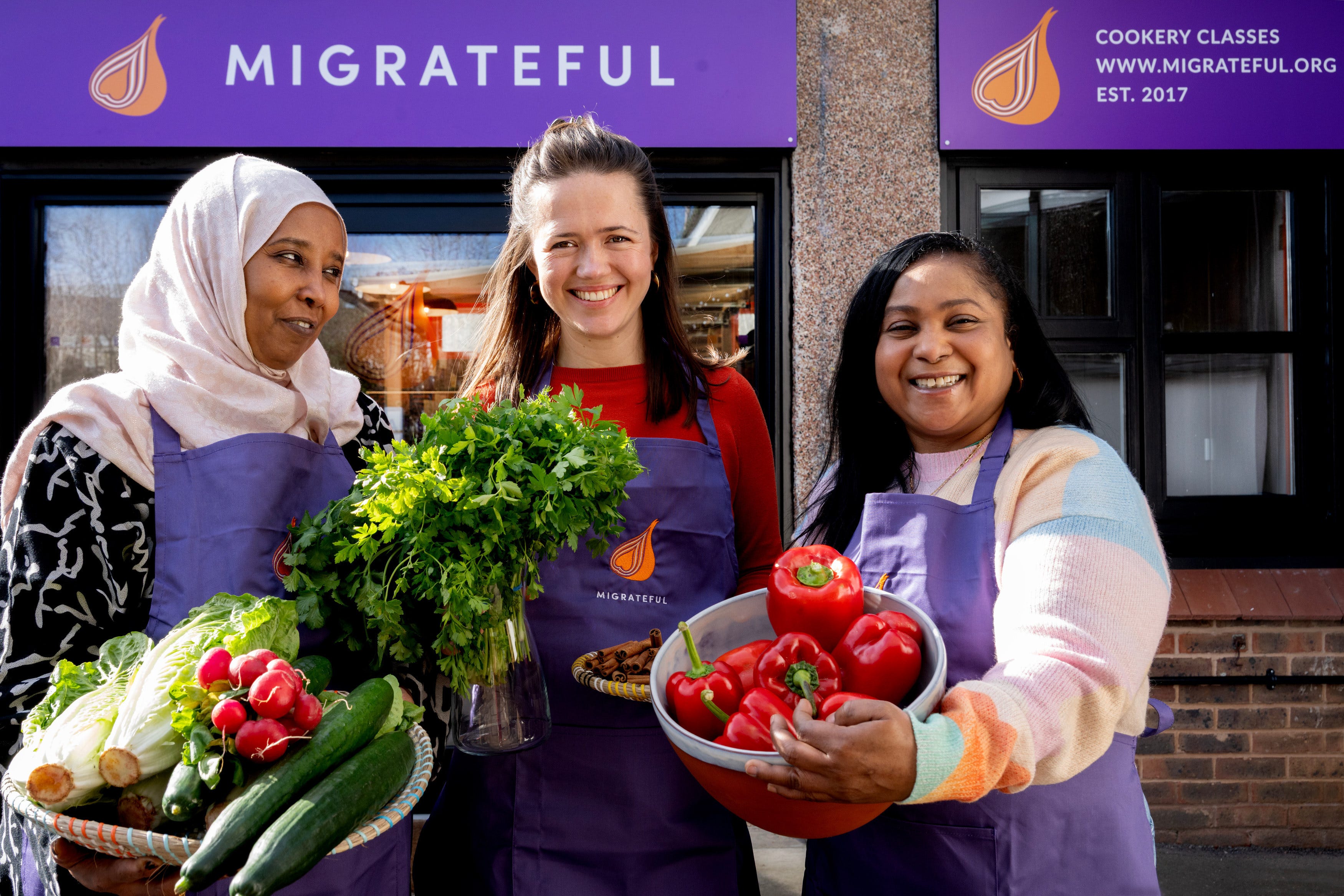
Interview with Jess Thompson
Edited for brevity and clarity.
Nearly ten years after starting Migrateful, how does the current climate around migration in the UK feel to you?
The disheartening thing is that objectively, the climate has got worse.
Seeing the protests last summer was incredibly upsetting for our community. Reform gaining popularity, even under a Labour government, and increasingly restrictive asylum policies… it can feel like we’re actually further away from the world we’re trying to create.
A lot of our chefs talk about feeling unsafe. When they come to a Migrateful class, it feels like this microcosm of how they wish the world could be. Somewhere they feel welcomed, celebrated and safe. But outside of that, many experience hostility. Quite a few of our chefs live in asylum hotels, so they’ve had protesters outside where they live.
When you build an organisation to solve a problem, and the problem gets worse, that’s difficult. But at the same time, I feel our work is more needed than ever.
And we know we’re having an impact. Around 70,000 participants have attended our classes, and our post-class surveys show 45% reporting increased knowledge about migrants’ situations and 25% reporting warmer attitudes towards migrants afterward. For behavioural psychology interventions, that’s actually a very significant result.
That is an amazing impact! How do you think Migrateful has enabled that shift in attitudes?
Early on, I met an academic who specialised in contact theory. This is the idea that people can hold prejudice towards a group, until they actually meet and connect with someone from that group. There are certain conditions where contact theory works especially well, for example, when there’s a shared goal and the power dynamic is equalised.
Consequently, our cookery classes work really well because the refugee chef is the expert. Everyone works together to cook a meal, then everyone eats together.
We also try to target the “anxious middle” as our audience. They’re not strongly pro-migration, but they’re not anti either. They’re the group most likely to shift through contact theory. We do this through corporate bookings, for example, where it’s the office manager booking the event, so people aren’t necessarily choosing to come themselves.
The fact that we’ve shown a measurable shift in attitudes is really exciting. If the impact was only for the refugees, it would still be worthwhile. But seeing there was also this wider hearts-and-minds impact makes it feel much bigger.
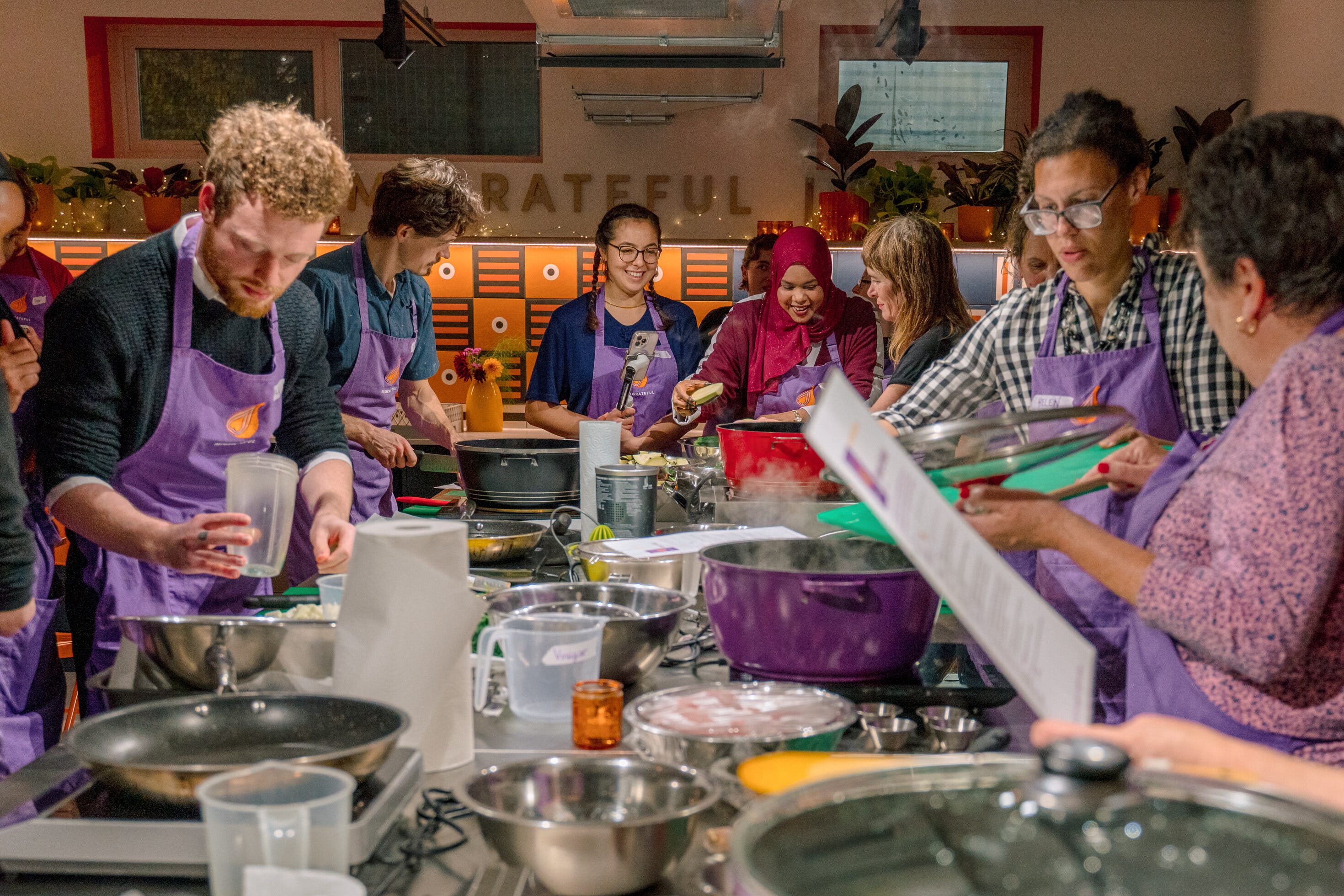
Absolutely, that wider piece is so important. Has the impact on your refugee chefs also been different to what you expected?
The primary reason for setting up Migrateful was supporting refugee women into employment, and it has continued to be successful in that. But the more I saw it play out in practice, the more I realised it’s also helping them to heal.
Our chefs may have had their asylum claim rejected for years, and felt unable to use their skills.
When the power dynamic flips in our classes, where they’re the leader, it transforms their confidence, self-esteem and sense of belonging. They feel celebrated. They feel like people in the UK actually want them here.
For example, one of our chefs, Majada, started teaching for Migrateful right after arriving from Syria. She had fled the government and arrived in the UK without her family. She started teaching classes before she even had the right to work, and we were able to support her through solidarity grants. It gave her confidence and community during a really lonely time. People loved her food so much that she eventually started her own Syrian catering company called The Syrian Sunflower. It’s now really successful! She does lots of events and even employs other Syrian refugee women.
What do you think have been the main drivers of your success?
Honestly, I think a lot of it comes from the Year Here philosophy of really understanding the people you’re trying to help, to understand what their problem is.
During my Year Here Fellowship, I worked at the Bromley by Bow Centre, where I was running a skill-exchange programme with migrant and refugee communities in East London. The migrants and refugees really wanted to work, but they faced huge barriers - language barriers, legal barriers, and unrecognised qualifications. Many had left behind successful careers. I started teaching English classes, and participants had to share a skill back with the group. I had 15 migrant and refugee women in my class, and every single one said they’d love to teach cooking.
From that understanding, I was able to start Migrateful. It showed that there is a genuine interest and demand from the chefs themselves.
There’s also a whole school of thought around the benefits of asset-based approaches - focusing on what people already have, rather than just what they lack. So Migrateful has created an opportunity where people can use their own skills to shape their journey towards independence. That’s incredibly empowering.
On the customer side, there was probably some luck in the timing! Post-Brexit, people really connected with the story and the brand. Migrateful is a positive story about migration that people want to be a part of.
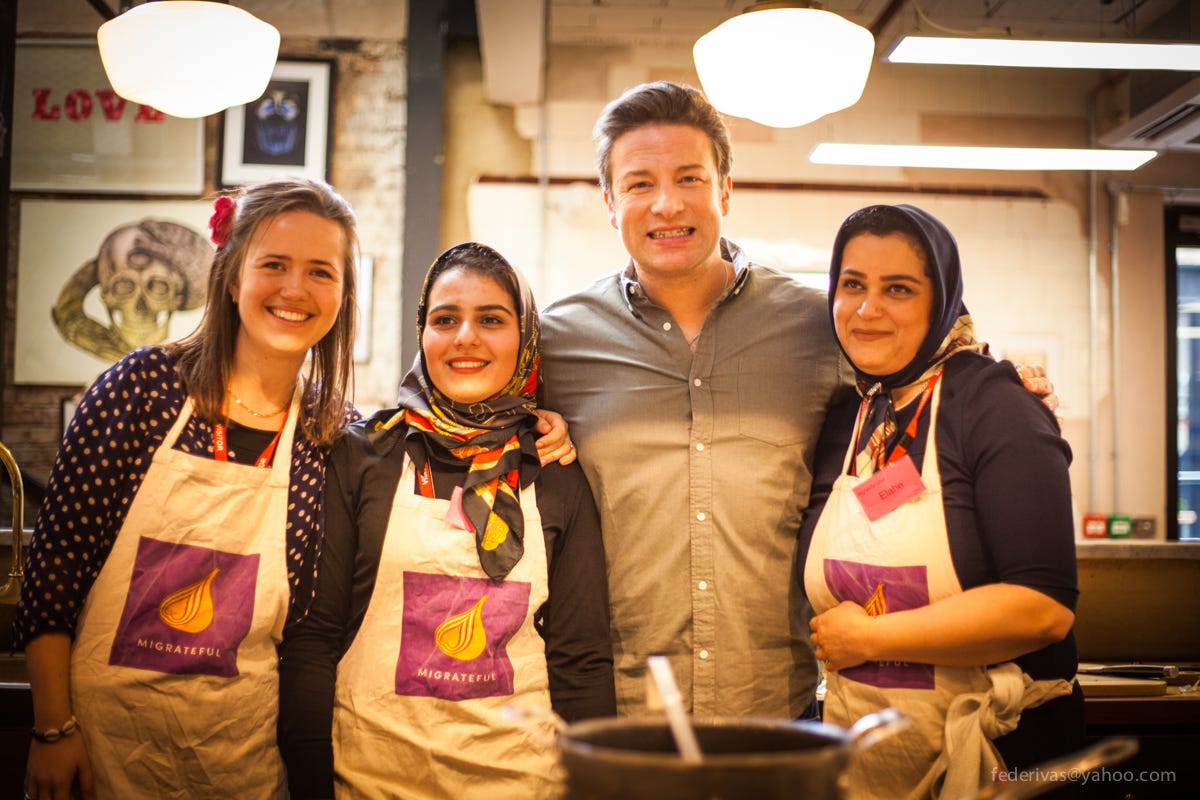
It’s definitely a great idea, but ideas don’t always make it to successful enterprises. It’s a testament to you as well, it can’t have been easy?
I started working on Migrateful when I was 24! I had no CEO experience, no management experience, no finance experience.
Within five years we had a million-pound turnover and a relatively large team.
I had to learn everything by doing, which meant making a lot of mistakes. It was incredibly stressful at times, but also an amazing way to learn. Now, nine years in, things feel much more settled.
Have there been any specific challenges that you’ve learnt from?
Probably the biggest challenge is the tension of trying to run a business and a charity at the same time. Even my staff sometimes struggle with that balance. They’ll say, “We shouldn’t be doing things just to make money,” and I have to explain that we do need to generate income in order to exist!
This tension shows in the kinds of people you hire too. You need people with commercial skills - marketing, operations, systems - but they often come from more corporate backgrounds, while you’re also trying to run a charity working with vulnerable adults.
It’s the classic social enterprise dilemma. The goals of financial sustainability and social impact don’t always perfectly align. Overall though, being a charity has meant we haven’t had to obsess purely over profitability. We’ve been able to focus on impact.
What about growth, how have you managed that?
We’ve done pretty well at growing - our current turnover is around £ 1.3 million.
But honestly, it’s not easy.
Because it’s an in-person event business, every time we grow we need more staff, more venues and more infrastructure. This means overheads go up as you scale, which is different to tech companies, for example. We have to rely a lot on grant funding.
What does the future look like for Migrateful?
We opened a cookery school in Bristol in November, which is a big step for us outside London. Bristol is my hometown, so it’s exciting personally as well.
We’re also starting to work more with young people.
Now that 16-year-olds will be able to vote, it feels like an important age group for us to target.
We’ve only run a few school classes so far, but before one class some students filled out questionnaires saying things like “I hate refugees”. After the class, they wrote things like, “That was amazing”, and talked about how much they loved meeting the chef and trying the food.
One teacher actually cried because she was so amazed by the transformation!
That’s awesome! So what do you think, how do we actually change things?
I think initiatives that genuinely bring people together from different backgrounds to “integrate” are really important. They’re not always easy to run, and they’re not always cost-effective, but they matter.
For refugees and migrants, there is a tendency to put pressure on them to “integrate”, rather than seeing it as a two-way process. Sometimes the concept itself can feel othering.
And the government doesn’t help this. The government will place asylum seekers into housing blocks, but not fund any initiatives that help them connect with their local community.
Community doesn’t just happen naturally anymore, we need to invest in it. We’re living in a time where people are increasingly online, increasingly isolated, and there are fewer shared community spaces, particularly since austerity. In the past, maybe people met through church or other shared institutions. Now we need different ways to bring people together.
Refugees and migrants are often presented by politicians and the media as a problem. But when people meet and connect with them as fellow humans, they stop seeing them as a threat. Migrateful is evidence of that. So any initiative that helps people connect across differences is doing something valuable to change things.
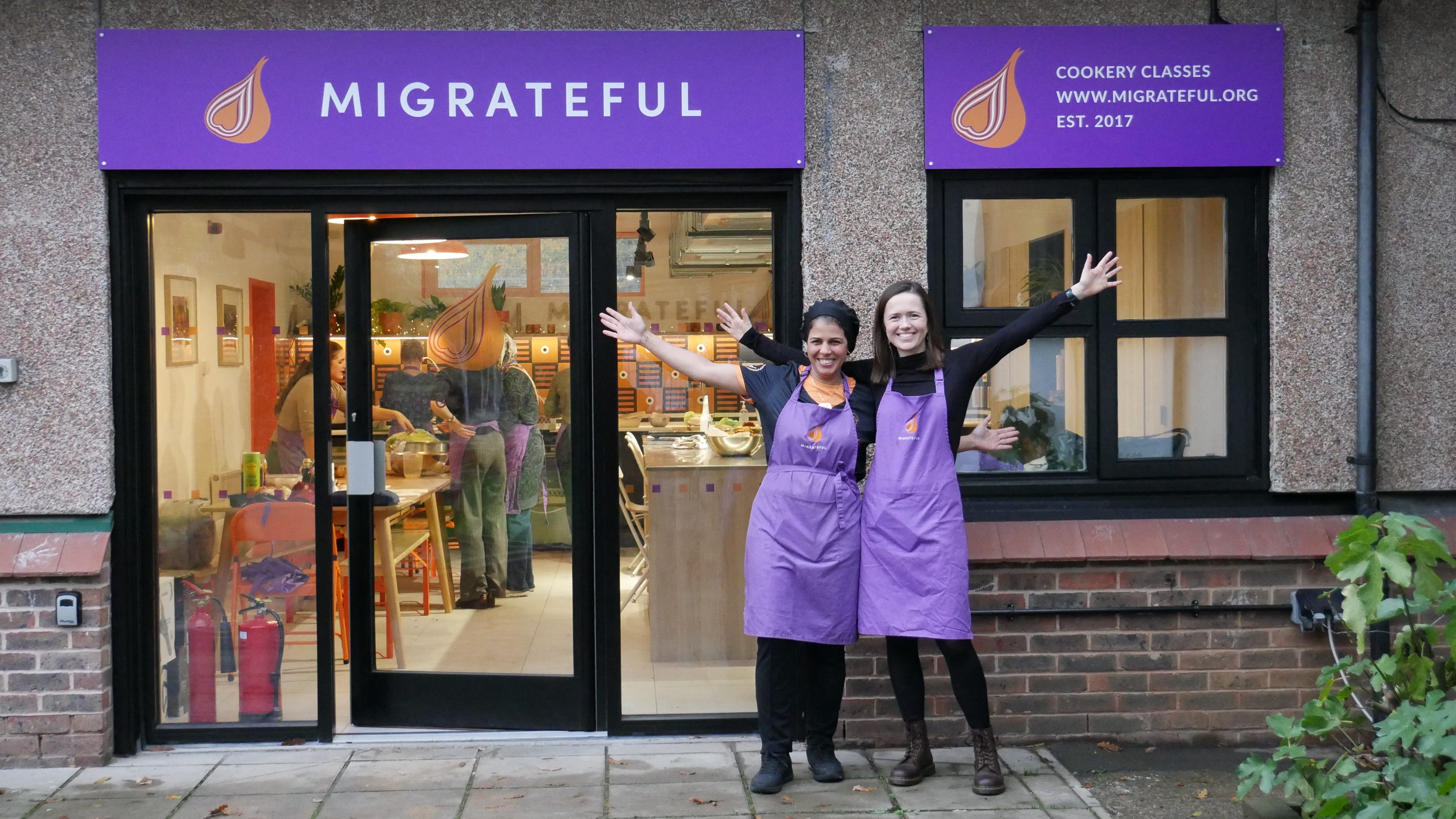

📆 Join Migrateful This Refugee Week, 15-22 June
If you’re in or around Bristol, join Migrateful for their event:
Migrateful Refugee Week: How Do We Build Connection in a Polarised World?
Wednesday 17 June
5 PM - 7:30 PM
Tickets from £13.45
What does connection look like in a polarised world?
This Refugee Week, and for the Bristol Refugee Festival we’re bringing Bristol together for an evening of thought-provoking conversation, live music and delicious food from Somalia, Sudan and Kurdistan.
Hear from Bristol’s newly elected Lord Mayor, Yassin Mohamud, Bristol’s High Sheriff Kalpna Woolf, Migrateful chef Kele and CEO Jess Thompson as we explore what it really means to build belonging, understanding and unity across differences.
Expect:
⭐ Open conversations
🎤 Live performance from rapper and poet @MoYah
🥟 Food made by Migrateful chefs
👯 A space to connect with community
Click the link here to book your ticket. We can’t wait to connect with you!
yes jess!!!
Beautiful read!